





Rewear Fashion Exhibition

SURVIVAL Geisha
'A graceful revival of remnants from a ceremonial, royal-burial garment...'
LOCATION: Fed Square Atrium (Melbourne, Australia)
DATE: Zero Waste Festival (12th - 23rd September 2026)


Who is she?
A beautiful and ghostly apparition from the afterlife, or a graceful and elegant figure from the present? This spiritual couture masterwork was fully handmade and resurrected from looked-over scraps to portray the revival of a strange, almost geisha-like corpse emerging from her burial shrine with a royal attitude, standing tall and proud despite— or because of her tattered story. Her charming silhouette, intricate materials, fabric tails movement, and intentional styling prove how something discarded can transform, evolve, and come back to life even more graceful and valuable. A confrontational journey of becoming and regrowth of fragments from several different past lives stitched into one surviving body, bringing something that didn't exist into life, or something dead back to life with a new spirit, enhancing its significance and aura.
\
The revival spell...
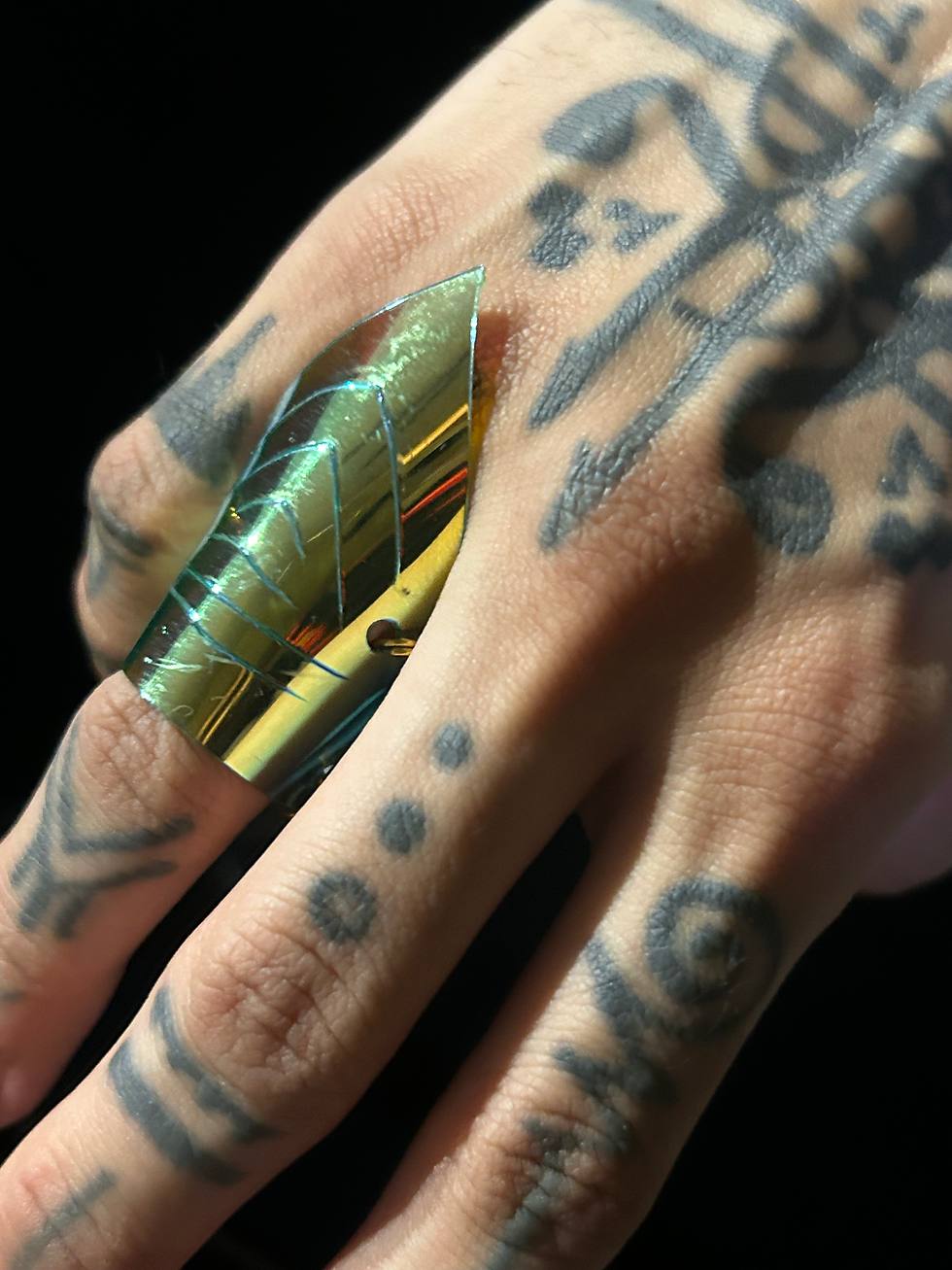
This improvised, artistic couture started from a few scraps found in a bin full of discarded strips and rags before the idea evolved through a pronged process of endless experimentations, resilience, patience, and intuitive improvisation, one thread at a time — somehow transformed into decorative, hanging pieces that almost make it feel like a graceful revival of remnants from a ceremonial, royal-burial garment worn by a seductress who enchants and beguiles all eyes, like a peacock tail. Paired and matched with a custom-made accessories collection from SANDSTORM fashion, the artist's own designer-brand for Silk Road revival glam, where they're available for purchase, the SURVIVAL Geisha portrays an ancient future like no other.
Direction & Composition
Visual beauty is everywhere in Yokoshima’s creative universe. Just like making his signature crystal sculptures, the artist patiently followed colour and texture in solitude over stretched hours developing the Geisha completely by himself because working alone in solitude had always been his forte. Through curiosity, experimentation, improvisation, and fashionable styling-instinct to direct the process, he allows his creations to reveal themselves and help them become what they want to become— often surprising him with his own discoveries like he did with her matching Samurai-inspired hat he crafted. Throughout her journey of becoming, the SURVIVAL Geisha blossomed from both aforementioned SANDSTORM custom-made accessories and a cocktail of random materials that helped shape her evolution, including fabric scraps from past projects, a broken Japanese Geta (wooden slippers) he fixed himself, neck-ties, table-cloths, a pocket-watch, gemstones, beads, tassels, and PVC left-over from the artist's accessory making sessions, including rivets, a broken hat, even an abandoned Chinese lucky-fortune tassel to complete her circle of revival and make it more powerful.
A timely memoir (the real story...)
When the Geisha was initially rejected for this exhibition, the artist fell into emotional turmoil, but this time, because of recurrent rejections, he decided a week later not to settle on 'unfortunately you weren't successful' and actually emailed the judges back about his grievance and told them why he thought the geisha was treated unfairly. Now that they reconsidered her after him spamming them with pictures of how she was evolving into, the SURVIVAL Geisha's story resembles him surviving his struggles.
Because Wolff already grew up throughout many distressful hardships that included abuse, homelessness, mental health struggles and self-exiting, the garment also tells the mythology of its maker of always turning anger and pain into grace and clarity, reflecting the beauty after years of hardships, his strong-willed resilience, and the never-dying optimism in his own journey of becoming, his crystallised evolution as his signature crystal works convey.
The inspiration:
One might say she might be a fantastic figure of a travelling merchant from the Silk Road in an Arabian Night fairytale; others may see her as an eccentric Japanese character in theatrical couture. But one thing is certain: she's inspired by Middle Eastern-Asian ceremonial styling aesthetics, particularly the visual world of Arabian Nights, but with a Yokoshima touch, an intuitive, colourful maximalism that is the signature of the designer's obsession with the Silk Road, Arabian-Asian fusion in his art.


The display:
Because the Geisha didn't get to have her own walk or performance on the runway, the artist built the display to match his vision of how the Geisha should be represented. Sculpting his own mannequin's head, painting the face make-up, recreating and adding the Japanese geta slippers, Wolff's patience and artistry shine through the Geisha's display and deliver an impactful image of survival, becoming, also what the future of sustainability can look like, hence adding a vintage pocket-watch he owned as well to represent Time, an evocative reminder that anything considered old or useless can become part of a greater journey of becoming something meaningful in the future.
LOCATION: Neighbourhood Justice Centre (Collingwood, Melbourne, Australia)
DATE: Running until November 2026
Distress turned into inspiration, raw stories brought to the light...


As with everything else in Yokoshima's artistic journey, both photography and painting produced during the time he was homeless were inspired by graceful survival, circling themes of patience, resilience, hope, and life itself.
Some of these photographs and artworks he produced during a period of homelessness and mental health struggles were selected to be part of a community project at the NJC that aimed to give a voice to raw human stories forward. These works are part of two memoirs he had written that share his story more thoroughly (can be found here); the first book being 'The Homeless Photographer: An album of self-reflection' that talks about how he was taking pretty pictures of his feelings in different states of mind, and the other 'Man'Si, the Starving Artist Catalogue' of colourful abstract paintings he made despite going through such a prolonged, difficult time on his own for many uncertain, distressful years. By turning pain to beauty, that's how the artist survives and finds comfort and hope.


